October 25, 1830
The Pale Blue EyeOctober 25, 1830, is the key night in the reconstruction of Leroy Fry’s final movements: Julius Stoddard saw him leave, but the purpose and destination of that departure remain uncertain. Later examination of Fry’s body challenged the apparent simplicity of a hanging, while the possibility of a meeting with a woman remained only a theory.
The Night at North Barracks
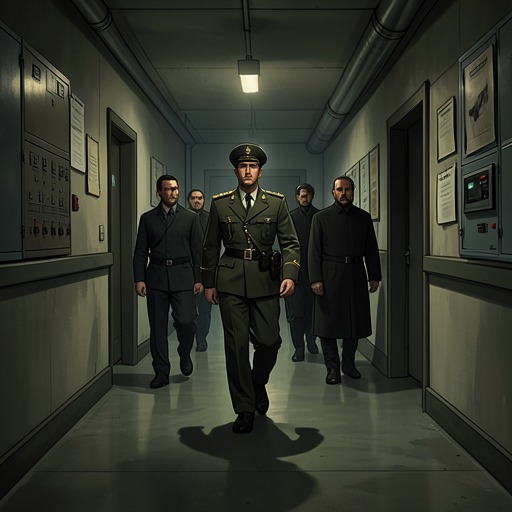
According to the account of Julius Stoddard’s movements, he was returning late from a friend’s room on the night of October 25. Roughly an hour after tattoo, he crept up the stairs of North Barracks and heard footsteps coming down. Thinking the approaching person was Joseph Locke, making one of his nighttime rounds, Stoddard pressed himself against the wall and listened as the steps drew nearer. The account establishes Stoddard’s presence in the barracks that night, but does not say that he saw who was descending the stairs.
Stoddard recalled one further detail: as Fry was leaving, Stoddard called after him. The surviving account does not preserve what was said. This brief exchange confirms that Fry’s departure was noticed, but it supplies no direct explanation of where he was going or whom he expected to meet.
The Unresolved Destination
Later, Augustus Landor considered the possibility that Fry had believed a woman was waiting for him at a cove near North Landing. The invitation associated with the theory was written in block capitals, so its author’s sex could not be determined from the handwriting. Landor therefore treated the proposed meeting as uncertain: Fry might have set out expecting to find a woman, and a woman might indeed have been there, but neither possibility was established. The date’s importance lies partly in this gap between a departure that could be placed in the night’s sequence and a destination that remained unknown.
Later Examination and Retrospective Meaning
The date also becomes a point of reference for the later investigation of Fry’s death. When Augustus Landor examined Fry’s body in an alcohol bath, he drew attention to the marks on the neck: the rope had not left a clean, even cinch but appeared to have shifted while seeking a hold. The observation complicated a straightforward reading of the death as hanging. During the same examination, a lump on the head was identified as a contusion; the physician could say only that such a lump resulted from contact with something hard and could offer no more without examining it. These findings belong to the later inquiry, not to what Stoddard witnessed on October 25, but they change how the night’s unexplained departure sits within the case: a known last movement does not, by itself, settle what happened afterward.